

I was having coffee with some friends in the High Valtaro not long after my first surgery (documented here), and the conversation turned to healthcare—specifically, how to get where you need to go when you’re in no condition to drive. One of them mentioned her sister-in-law and a local group called “Assistenza Pubblica” (AP) that took her all the way to Parma for chemotherapy.
I had never heard of AP before. At that moment, I was staring down the barrel of a lymph node biopsy that required, once again, three consecutive days in Parma. To me, that meant booking another Airbnb and paying out-of-pocket, which frankly flies in the face of my favorite pastime: touting the “free” Italian healthcare system to anyone who will listen (ahem). I decided to investigate.
I walked down to the local AP office and asked if they could indeed get me to Parma. They explained that while local members (soci) pay a nominal amount for various rides, the SSN (Servizio Sanitario Nazionale) would actually bill the transport directly if my General Practitioner signed off on it.
My regular doctor wasn’t in, but another doctor at the centro medico agreed that my lymph node biopsy and three consecutive days in Parma should be an acceptable use of the service, especially if, like us, you don’t have a car and the public transit schedule in the mountains is more of a suggestion than a reality. He signed the paperwork required, and Joe and I would not need an Airbnb to tide us over during my upcoming surgery. Suddenly, my logistics problem was solved.
This was just the beginning! After my biopsy, I was referred to my oncologist (as I discussed in my prior post), and I would need eighteen radiotherapy sessions at the hospital in Parma. I didn’t realize it yet, but I was also signing up for the most intensive Italian immersion course of my life.
1,600 Meters of Conversation
When I dropped in to see my GP, he agreed that 36 mountain highway trips for 18 straight business days of radiotherapy was a grueling medical marathon that no one should do solo. Thus, every day for 18 days, an Assistenza Pubblica driver would pick me up for the 45-minute trek to the Ospedale Maggiore di Parma. The volunteers were varied. Sometimes it was someone I knew; many times it was a new face. Many of the volunteers are retired, or have flexible work hours and volunteer a morning a week. Others are younger volunteers, but they typically do not drive to Parma! Often these younger volunteers have not had their driver’s licenses for the 3 years of their “provisional period” (neopatentati), and can only drive smaller cars, so they typically do “in town” drives that only need one of the smaller vehicles.
For a language nerd like me, these trips were gold: 45 minutes of uninterrupted, one-on-one Italian conversation twice a day.
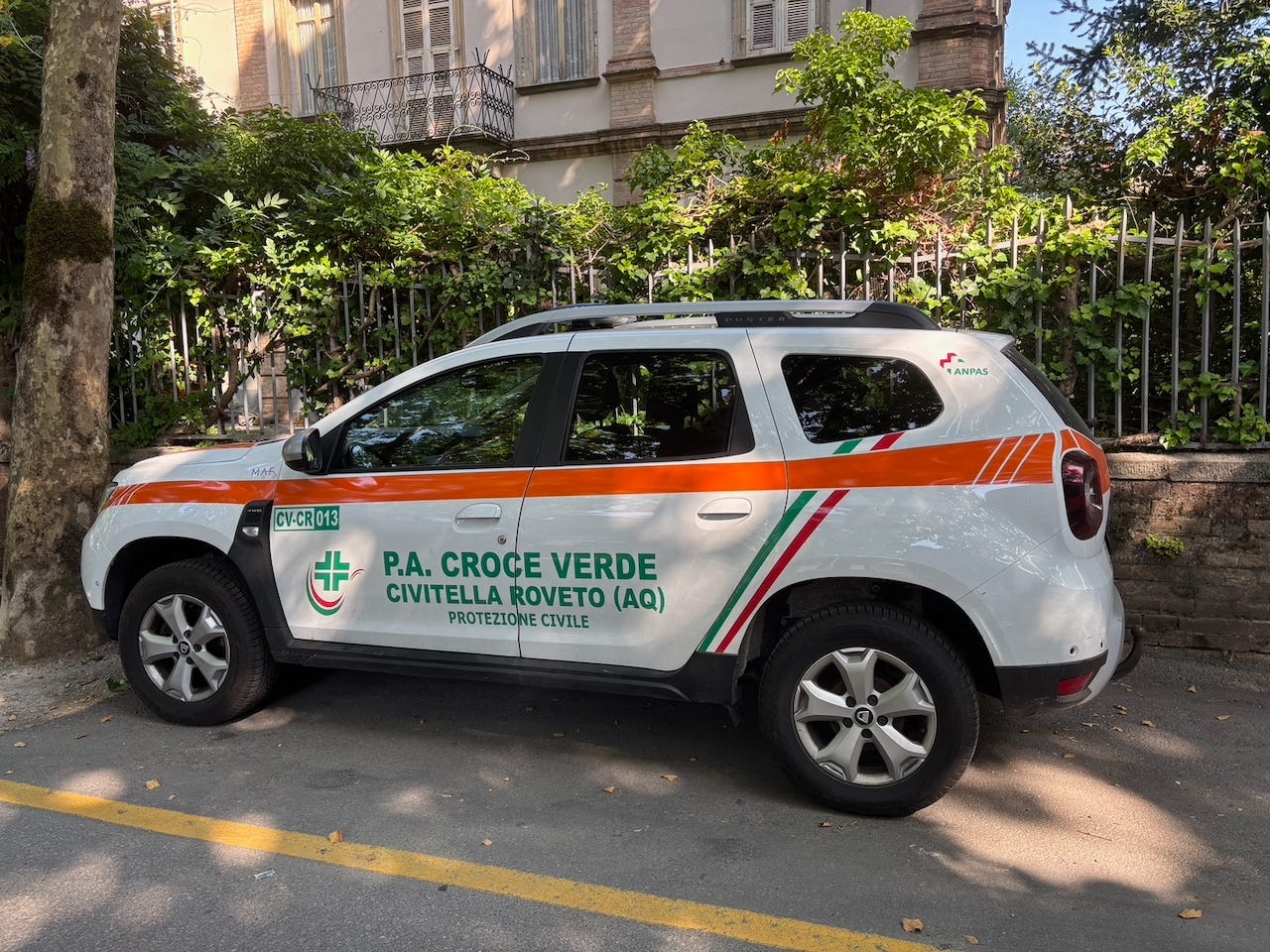
We talked about everything. The weather, how my husband and I met, why we decided to move to Italy, how we like our life here, favorite pastimes, family, work, whatever topic interested both the driver and the passenger. Only my very first trip involved a second passenger. For the remaining 17 trips, it was just me and the driver.
Once we were talking with such animation that the driver took the wrong entrance to the A-15, which, because Italian rural autostrade have exits roughly every light-year, meant we got to drive miles out of our way while I practiced my “FFS” vocabulary. Another asked if I had time for a coffee, and we hit a bar across town for a quick espresso before heading back to the mountains. On my very last day, my driver even gave me a book his father had written about WWII.
It turned what could have been a depressing medical routine into something I actually looked forward to. It reminded me that community in Italy isn’t just a “lovely” abstract concept; it’s the actual infrastructure that keeps the place running.
A National Network, and How it Works
Italy has a large network of volunteer associations under the umbrella of ANPAS (Associazione Nazionale Pubbliche Assistenze), or part of the Italian Red Cross, Green Cross, Misericordie, etc. These are all over Italy, but in rural communities, they are truly volunteer-driven powerhouses. They aren’t just a ride-share. They are the backbone of the healthcare system here, funded by memberships, fundraisers, and regional reimbursements.
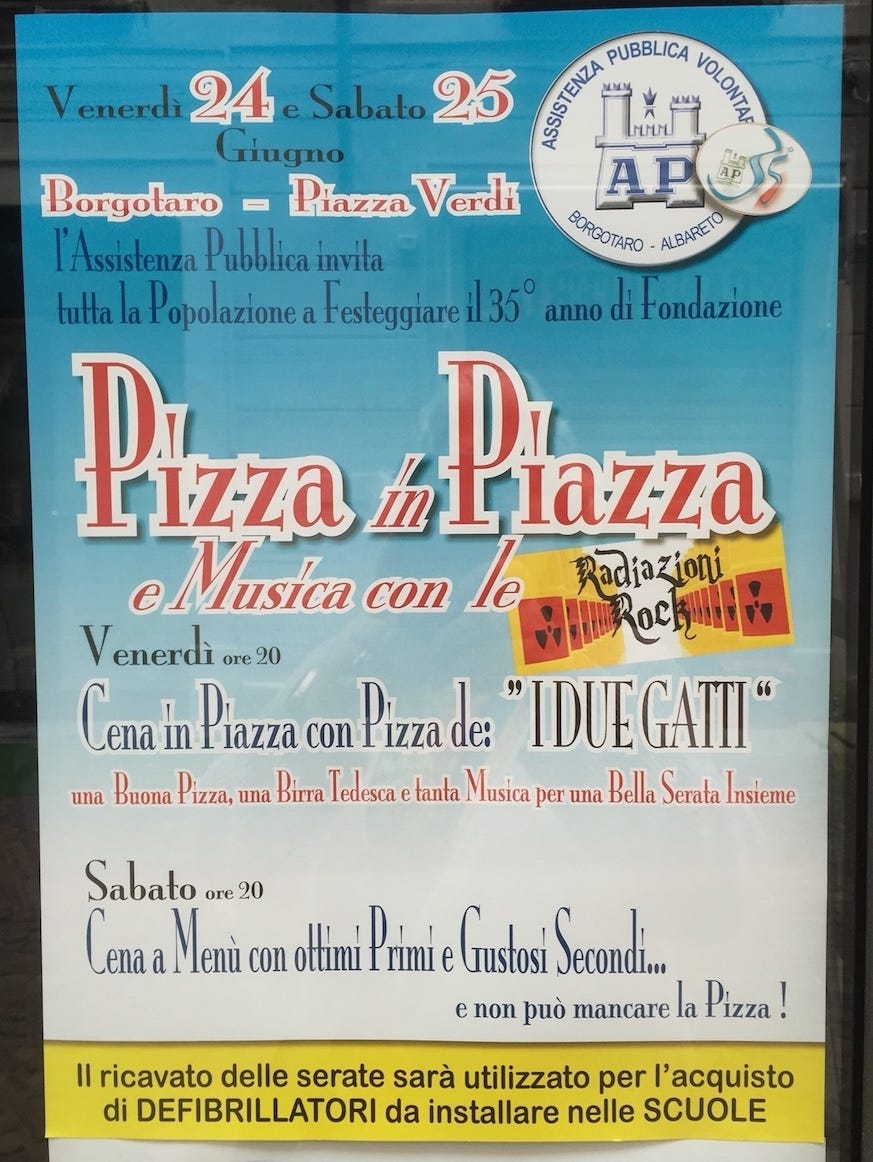
In many locations, they provide the ambulance service, EMTs, and the “Taxi Sociale” for the medical system. The first two are known by most people worldwide. The latter, not so much.
Here is how this “Taxi Sociale” or medical transport usually breaks down, in three basic tiers: Medically necessary (radiotherapy, chemo, physical therapy, required checkups, etc); Benefits of membership (discounts for transportation for medical errands, general doctor’s appointments, usually under €30 a year for membership); and Social Lifeline (based on income for those who do not drive or do not have a social network to assist them with medical issues).
I cannot even begin to thank these volunteers for their time, and for welcoming me in their own way to our community. They were warm, concerned, encouraging, and yes, language coaches!
If you live in (or plan to move to) a smaller Italian city or town, be sure to check out the Assistenza Pubblica situation in your area. It might be the best membership you pay for in Italy!
