
The sounds of Monday morning
We found out what "living above the market" actually means at 7:30 on a Monday morning in May 2016. We had been in the apartment for maybe four days when from somewhere below our windows came the sound of a traveling market assembling itself — stall by stall, crate by crate — on the street directly beneath us.
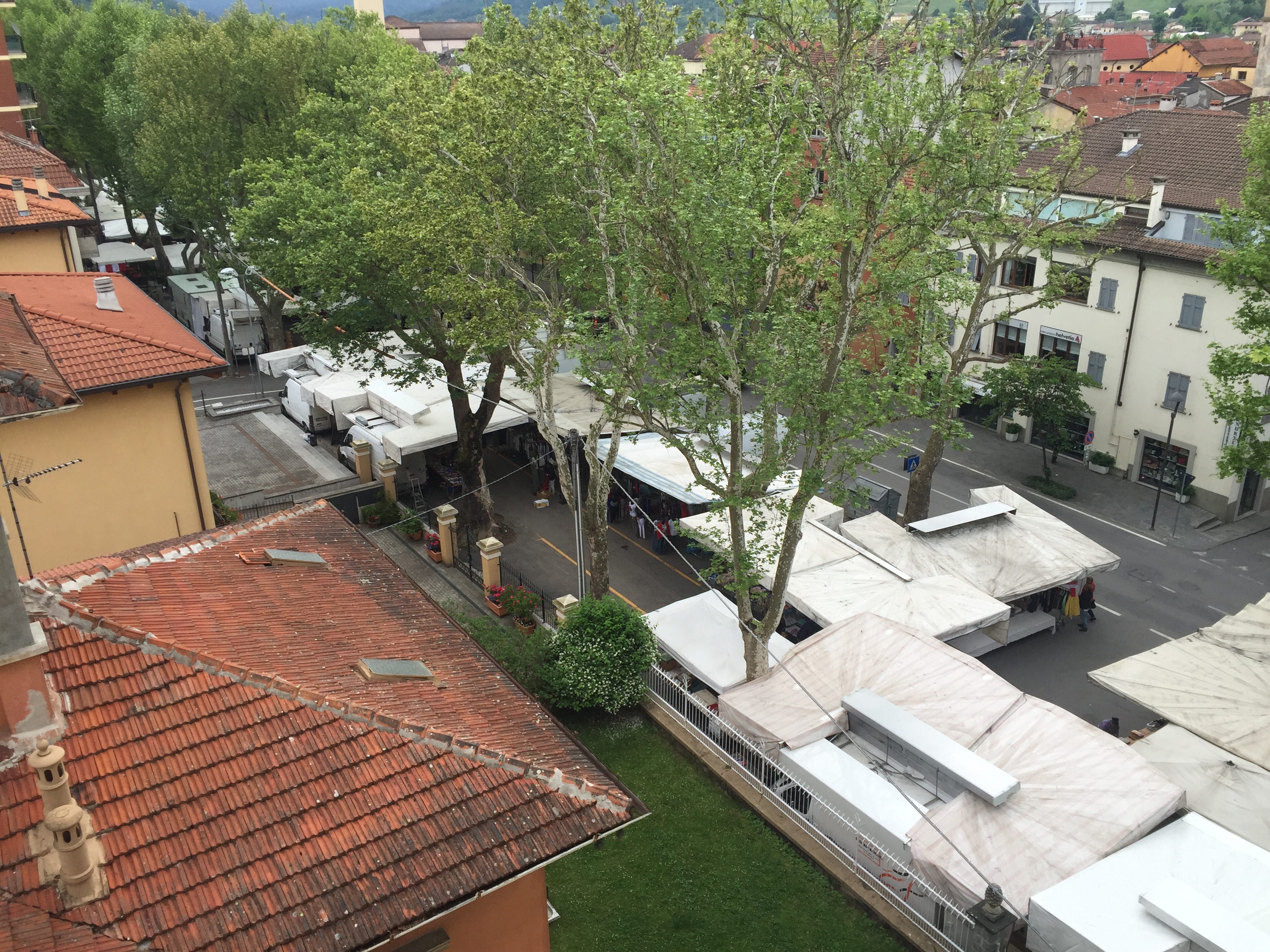
We had almost taken a different apartment near the San Domenico church, where would have been knocked out of bed by the bells at 7:30. The market noise, by comparison, seemed pleasant and welcoming. So we pulled on our shoes and went down to look.
I grew up with American farmers markets. They typically mean local produce, artisan jam, or somebody's homemade honey. What happens below our windows every Monday is something else entirely. There are mountains of produce, clothing stalls, shoes, kitchen goods, curtains, wine, a hardware stand, the Italian equivalent of a dollar store. But do you know what I love most? There’s a large rotisserie truck where chickens, porchetta, and rabbit turn on spits until they're the kind of thing that makes you revise your dinner plans on the spot.


We have bought lambrusco secco from the wine man at that market for almost ten years. He always knows what we want.
So, for the last nine years, our Monday morning ritual has pretty much been the same. We start out at Bar Centrale where they just appear with “due cappuccini e una brioche vuote” (two cappuccinos and a plain croissant). I pinch off a small piece from one end of the croissant (I can’t eat an entire croissant every morning and keep my waistline happy!). After breakfast, we wind through centro storico to make a stop at the butcher (he grinds the beef fresh, while you wait, which is one of those small things that you realize is special about your day). Then we head for the market (it is “on the way home” after all!) to pick up something from the produce stall, wander past the salumiera, and end up at the rotisserie — Hell’s Kitchen, as the sign proudly proclaims — where the spits have been turning since early morning.
What Lockdown taught us
In February 2020, Italy went into one of the strictest lockdowns in Europe. We didn’t leave our apartment for months, except to take out the trash (a privilege we argued over). We are, by nature, homebodies. Joe and I can spend days in each other’s company without either of us going stir-crazy. We had, as I pointed out to anyone who would listen, been training for exactly this scenario for four years. And yet….
My business runs on American time zones, which means most of my working hours don’t begin until mid-afternoon Italian time. The morning cappuccino is where we talk with friends. The Monday market is where the wine man knows our preferences, and the produce vendor recommends the best apples for the season. The aperitivo is the end of day recalibration that separates “work time” from “evening.” What I didn’t understand until the quarantine was that our routine was actually our daily infrastructure. We had the structure of a day that moves through town rather than through rooms. Without those external routines, the days had become long and formless.
The quarantena — the word comes from the Venetian practice of keeping ships at anchor for forty days during the Black Death to prevent the disease from coming ashore. I distinctly remember when we hit day 41. My friend Elisa pointed out, when I mentioned we were on day “quarantuno della quarantena” (day 41 of the quarantine), that this seemed deeply wrong. And of course she was correct. Forty days is a quarantine. Forty-one is just showing off, and of course, the restrictions continued well into 2021, and many prudent people were adamant about keeping some of them (especially masking) into 2022 (there will be more on this in a future post)!
I knew we had built an actual life here, rather than an extended vacation, because I felt the loss of these routines in our day.
Life is good here. I’m sure it can be good for you too! But the question worth asking before you move is not only “where do I want to live?” It’s “what do I want my Monday to look like in year five?”
